
2026: World Water Day | Water and Gender
Celebrate World Water Day with the World Water Film Festival, streaming free worldwide Saturday, March 21st, through Sunday, April 5 at 11:59 PM EST.
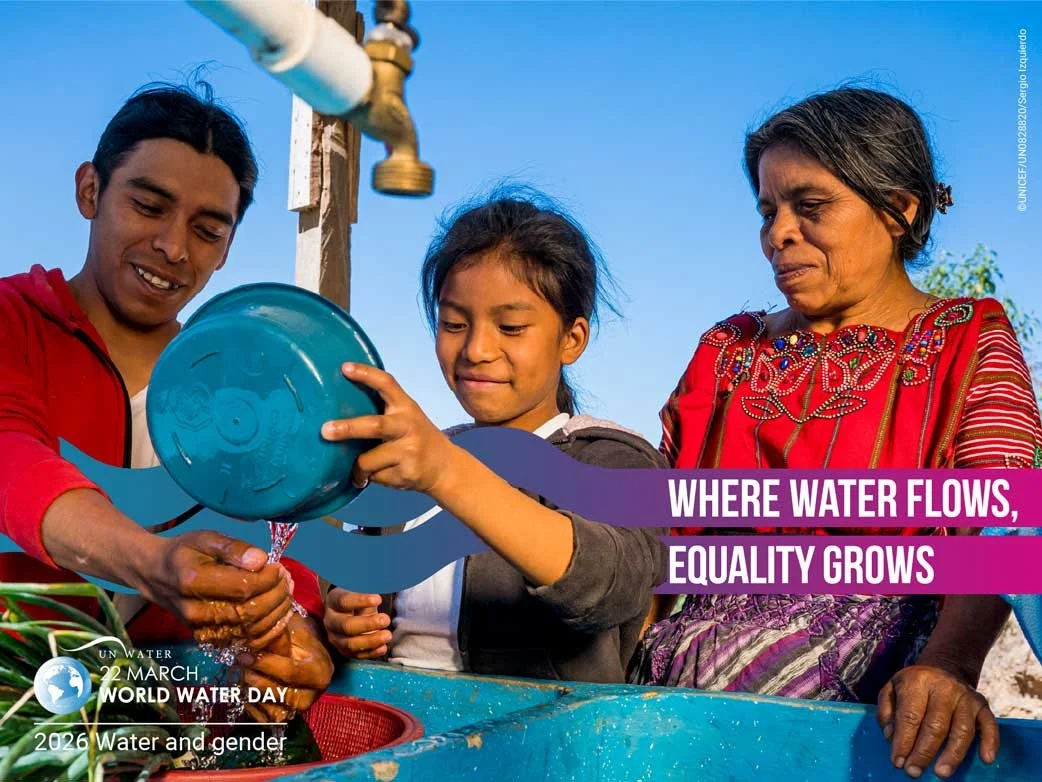
World Water Day highlights the importance of freshwater and the urgent need to manage it sustainably. It focuses global attention on water challenges, from access and sanitation to climate impact, and calls for action to protect this essential resource.
The World Water Film Festival brings this mission to life through the power of storytelling. By showcasing films from around the world, the film festival highlights the deep connection between people and water, from issues of scarcity and pollution to innovation, resilience, and hope.
This special online event makes these powerful stories accessible to everyone, everywhere. Each film is an invitation to better understand the value of water and the role we all play in protecting it.
Through global voices, diverse perspectives, and human-centered storytelling, the film festival supports the goals of World Water Day by raising awareness, inspiring action, and encouraging a shared responsibility for our planet’s most vital resource.
Join us, press play, and be part of the ripple effect.
World Water Day Featured Films:
Knowing (00:06:47)
About the Film: KNOWING features a poem created by Erika E. Wade during the summer, exploring personal themes of family, community, access to nature and more. Film Credit: Southern Exposure Films
Social Media Links: Facebook | Instagram | X | Threads
Any Other Day: A Cholera Story (00:14:53)
About the Film: Sisters Christina (22) and Chifuniro (19) lost their grandmother to cholera. This film is a unique first-hand account of this devastating illness - and the stigma that accompanies it.
Social Media Links: YouTube | Facebook | Instagram
Immersed (00:10:23)
About the Film: The documentary explores the profound connection between humans and nature through the story of an open-water swimmer who braves the extreme temperatures of Ushuaia. Immersing herself in remote, icy landscapes, she reflects on one of today's biggest environmental issues: ocean warming.
Instagram Links: @camipignocchi@danajazm@joaquin.tucci
Women of the Stony Shore: Shinnecock Kelp Farmers (00:26:19)
About the Film: A group of Indigenous women from the Shinnecock Nation fight for environmental restoration in the waters of their homeland through kelp farming. Their traditional ecological knowledge intersects with their struggle for sovereignty as these farmers protect lifeways and cultural practices for their tribe along the Long Island shore.
Social Media Links: Instagram | Instagram
Flushing Injustice (00:19:25)
About the Film: Two women in the US state of Alabama are improving community health, one backyard at a time, helping low-income families afford proper wastewater disposal systems. This work not only helps families, it is protecting an entire water table! Film Credit: Southern Exposure Films
Social Media Links: Facebook | Instagram | X | Threads
Darlene and Truckhouse (00:06:49)
About the Film: Darlene Gilbert, a Mi’kmaw grandmother and Sixties Scoop survivor, finds her voice as a land and water protector in the fight against Alton Gas. This pivotal struggle not only leads her to sobriety but also reconnects her with her Indigenous roots. From her confrontation with Prime Minister Justin Trudeau to her arrest, Darlene's journey is one of resilience and healing. The film goes behind the headlines to reveal how frontlines activism became a path to self-discovery for Darlene, culminating in the decommissioning of Alton Gas. 'It brought me back to me,' she reflects, overlooking the Shubenacadie River, a testament to the profound connection between women, water, and the fight for environmental justice.
Social Media Links: Instagram | Instagram
Our Blue World
The 2026 UN World Water Day theme is "Water and Gender: Where Water Flows, Equality Grows." Its three core messages are that the water crisis affects women and girls most acutely, that women must be centred as leaders and decision-makers in water solutions, and that gender-equal water governance produces more inclusive and sustainable outcomes for all.
The stories of Li An Phoa and Nancy Tuaine in Our Blue World: A Water Odyssey (2024, Brave Blue World Foundation) speak directly to each of these messages.
Together, these two women's stories make Our Blue World a compelling companion to World Water Day 2026: one shows women leading scientific and civic water restoration across Europe, and the other shows Indigenous women shaping water law and policy in the Pacific — both living proof that where women lead, water thrives.
Social Media Links: LinkedIn | YouTube | Instagram | Facebook | X
-
Nancy Tuaine, a Māori leader and Te Puni Kōkiri Regional Manager based at Whangaehu Marae near Whanganui, New Zealand, represents the power of Indigenous women's knowledge and leadership in water governance. In the film, she discusses the landmark legal personhood granted to the Whanganui River — Te Awa Tupua — which recognises the river as an ancestor with its own rights, a concept rooted in Māori cosmology. Her story illustrates how centring women's voices, particularly those of Indigenous women who hold deep relational knowledge of water, produces more just and sustainable water governance — a core principle of the 2026 theme.
-
Li An Phoa, a Dutch philosopher and holistic scientist, is the founder of the Drinkable Rivers movement. In the film, she embodies women's leadership in water stewardship by walking thousands of kilometres along rivers — over 15,000 km to date — engaging communities in citizen science, testing water quality, and building grassroots "river family" networks to restore rivers to drinkable health. Her work demonstrates precisely what the 2026 theme calls for: a woman whose voice, agency, and vision are driving transformative, community-centred water action from the ground up.